
Key takeaways
- Habits beat diets because they still work when motivation is low.
- Start with one or two changes, make them easy and add more only when they feel normal.
- Protein, vegetables, regular meals and water cover most of what matters.
- No food needs to be banned. Portion and frequency are what count.
- Expect lapses. The habit that matters most is returning to normal at the next meal.
Healthy eating habits are small, repeatable actions, such as eating protein at each meal, filling half your plate with vegetables and planning tomorrow's food today. They last when you build them one at a time and fit them around the food you already eat. Strict diets fail because they ask you to change everything on a Monday.
Why do healthy eating habits beat strict diets?
Healthy eating habits beat strict diets because they do not depend on willpower. A diet is a set of rules you follow until you stop. A habit is something you do without much thought, so it survives a bad day, a busy week or a holiday.
Strict diets usually fail in the same way. They remove foods you enjoy, ignore the meals your family eats and demand perfection. Then a wedding, a late shift or a stressful week breaks the rules, and everything goes.
Habits work the other way round. They add structure to your existing meals instead of replacing them. Rice, chapati, bread and your usual dinners stay. The portions, the balance on the plate and the routine around them change. That is the thinking behind losing weight without a crash diet.
Which healthy eating habits should you build first?
Build the habits that give the most return for the least effort first. These eight cover the ground for most people. You do not need all of them at once.
| Habit | What it looks like |
|---|---|
| 1. Protein at every meal | A palm-sized portion or more of eggs, chicken, fish, dal, yoghurt or paneer |
| 2. Vegetables or fruit at most meals | Half the plate as salad or cooked vegetables where you can |
| 3. Regular meal times | Three meals a day at roughly the same times, with planned snacks if needed |
| 4. Water as your main drink | Tea and coffee without much sugar. Juice and fizzy drinks occasionally |
| 5. Planning ahead | Knowing tomorrow's meals before tomorrow starts |
| 6. Sensible portions of starchy food | A measured serving of rice, bread, chapati or pasta, not unlimited |
| 7. Eating slowly, without a screen | Sitting down, taking about 15 to 20 minutes |
| 8. A plan for treats | Foods you love, chosen on purpose and enjoyed |
Protein keeps you full and supports muscle. If you only build one habit, build this one. The high protein foods list will give you ideas.
Vegetables and fruit add fibre and volume for few calories. Add them to dishes you already cook: extra onions, tomatoes and spinach in a curry, a salad next to grilled meat, fruit after dinner.
Regular meals prevent the long gaps that end in overeating. Skipping lunch and arriving home starving is one of the most common causes of evening snacking.
Water needs vary with your size, the climate and how active you are. The steps and water calculator gives you a personal target.
How do you build a new eating habit?
Build a new eating habit by making it small, attaching it to something you already do and repeating it until it is automatic. Then add the next one.
- Choose one habit. Pick the one that would make the biggest difference, or the one that seems easiest.
- Make it specific. "Eat better" is not a habit. "Have eggs or Greek yoghurt at breakfast every weekday" is.
- Attach it to an existing routine. Fill your water bottle when you make your morning tea. Prepare tomorrow's lunch while dinner is cooking.
- Make it easy. Keep the foods you want to eat visible and ready. Keep the foods you tend to overeat out of sight, or buy them in smaller amounts.
- Track it simply. A tick on a calendar is enough.
- Add the next habit once this one takes no effort, usually after two to four weeks.
Two habits kept for a year will do more for you than ten kept for a fortnight.
How do you eat well with a busy schedule?
You eat well with a busy schedule by deciding in advance, so that tired evening decisions are already made.
Practical steps:
- Cook once, eat twice. Make extra chicken, dal or rice at dinner and use it for lunch the next day.
- Keep a short list of default meals. Three breakfasts, three lunches and five dinners that you can make without thinking.
- Stock quick protein. Eggs, tinned tuna, Greek yoghurt, cooked chicken, tinned chickpeas.
- Carry a snack. Fruit, nuts or a yoghurt stops a vending machine deciding for you.
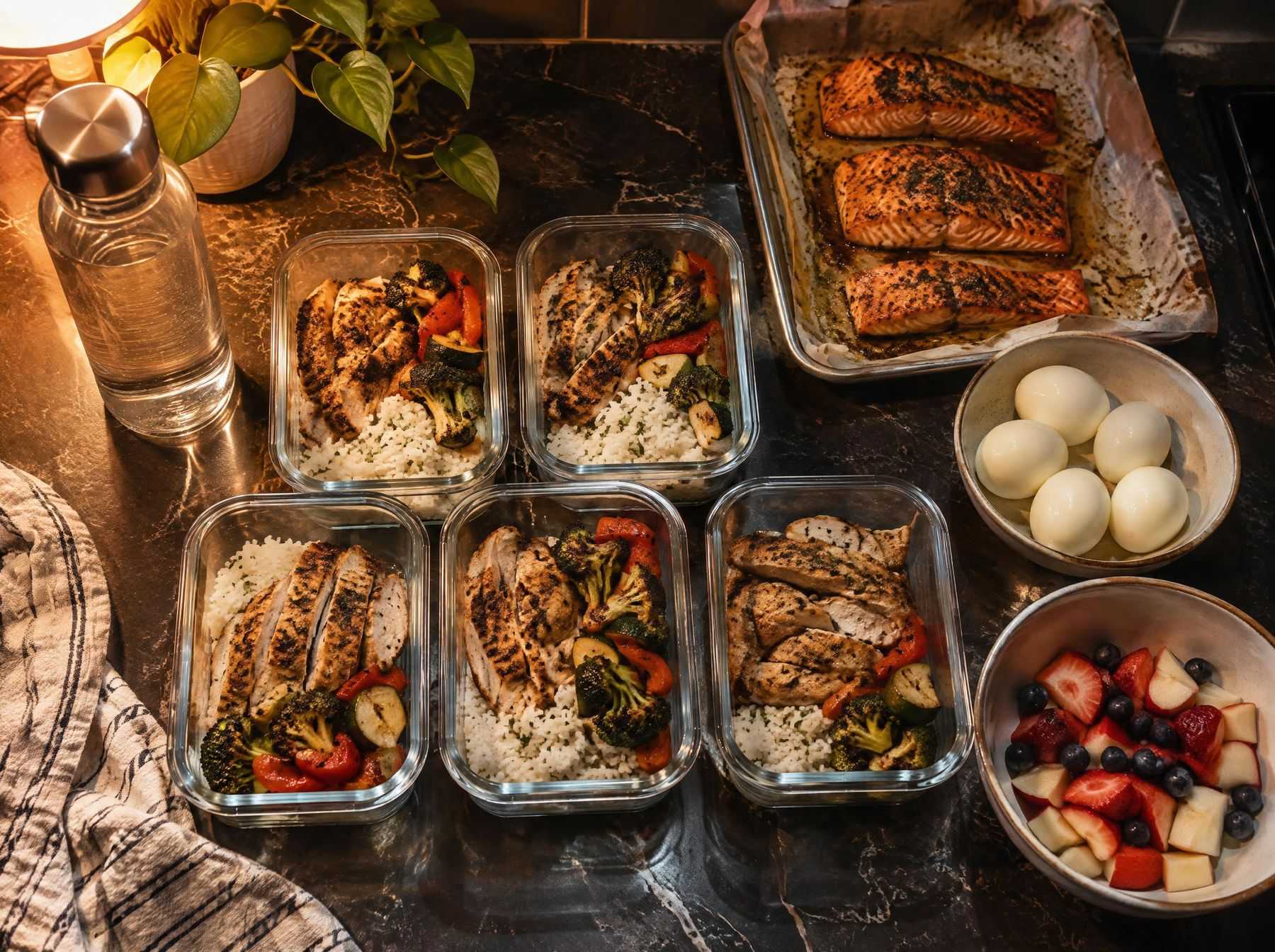
A couple of hours at the weekend can cover most of the working week. The guide to meal prep for busy people shows how to set it up.
How do you keep healthy habits with family meals and eating out?
You keep them by adjusting your plate, not by eating separately. Shared meals matter, and a way of eating that pulls you away from the family table will not last.
At home:
- Serve yourself protein and vegetables or salad first, then add rice or bread.
- Eat the same food as everyone else, in a portion that suits your goal.
- When cooking, use a measured amount of oil or ghee instead of pouring freely.
At a restaurant or a gathering:
- Look for a grilled, baked or tandoori main with a side of vegetables or salad.
- Choose one extra you really want: bread, dessert or a starter. Not all three.
- Eat slowly and stop when you are comfortably full.
- Go back to your normal routine at the next meal. Do not skip meals the day after to make up for it.
There is more on this in healthy eating with family and cultural meals and eating out and still losing weight.
What should you do when you slip?
When you slip, go back to your normal habits at the very next meal. Do not wait for Monday, and do not punish yourself with a day of very little food.
One large meal makes little difference to a month of eating. The damage comes from the reaction: "I have ruined it, so I may as well carry on."
A few things help:
- Expect it. Birthdays, Eid, holidays and hard days will happen. They are part of normal life, not failures.
- Look for the cause. Were you too hungry? Too tired? Was the plan too strict? Adjust the habit so the same situation goes better next time.
- Keep one anchor habit. Even on the worst day, eat a proper breakfast with protein or drink your water. It keeps the routine alive.
If your eating often feels out of control, or you are stuck in a cycle of restricting and bingeing, speak to your GP. That needs proper support, not another set of rules.
Building habits is easier with someone checking in. At JR Coaching, nutrition targets are built around each client's food preferences, family meals and schedule, and reviewed every week. See the nutrition coaching page for how it works.
Frequently asked questions
How long does it take to form a healthy eating habit?
It varies from person to person and from habit to habit. Simple actions, such as drinking water with meals, can feel automatic within a few weeks. Bigger changes, such as planning meals ahead, take longer. Focus on repeating the habit in the same situation each day. Missing once does not undo it, as long as you carry on.
Do you have to give up your favourite foods to eat healthily?
No. Banning foods tends to make you want them more and overeat when you finally have them. Keep the foods you enjoy, choose when you will have them and serve a sensible portion. If most of your meals are built on protein, vegetables, fruit and whole foods, there is room for the rest.
What is the single most important healthy eating habit?
For most people it is eating a proper portion of protein at every meal. It keeps you full for longer, supports your muscles and tends to improve the rest of the plate without extra effort. The close second is eating at regular times, because long gaps without food lead to poor choices later in the day.
The bottom line
Lasting change comes from a few simple habits repeated for a long time, built around the food and family life you already have. Start with one, make it easy and add the next when you are ready. No crash diets. No guesswork. If you want help building them, with a weekly review to keep you on track, apply for coaching and JR will reply personally.
This guide is general information for healthy adults and is not medical advice. If you have a health condition, are pregnant or take medication, speak to your GP before changing your training or diet. Results vary from person to person.

