
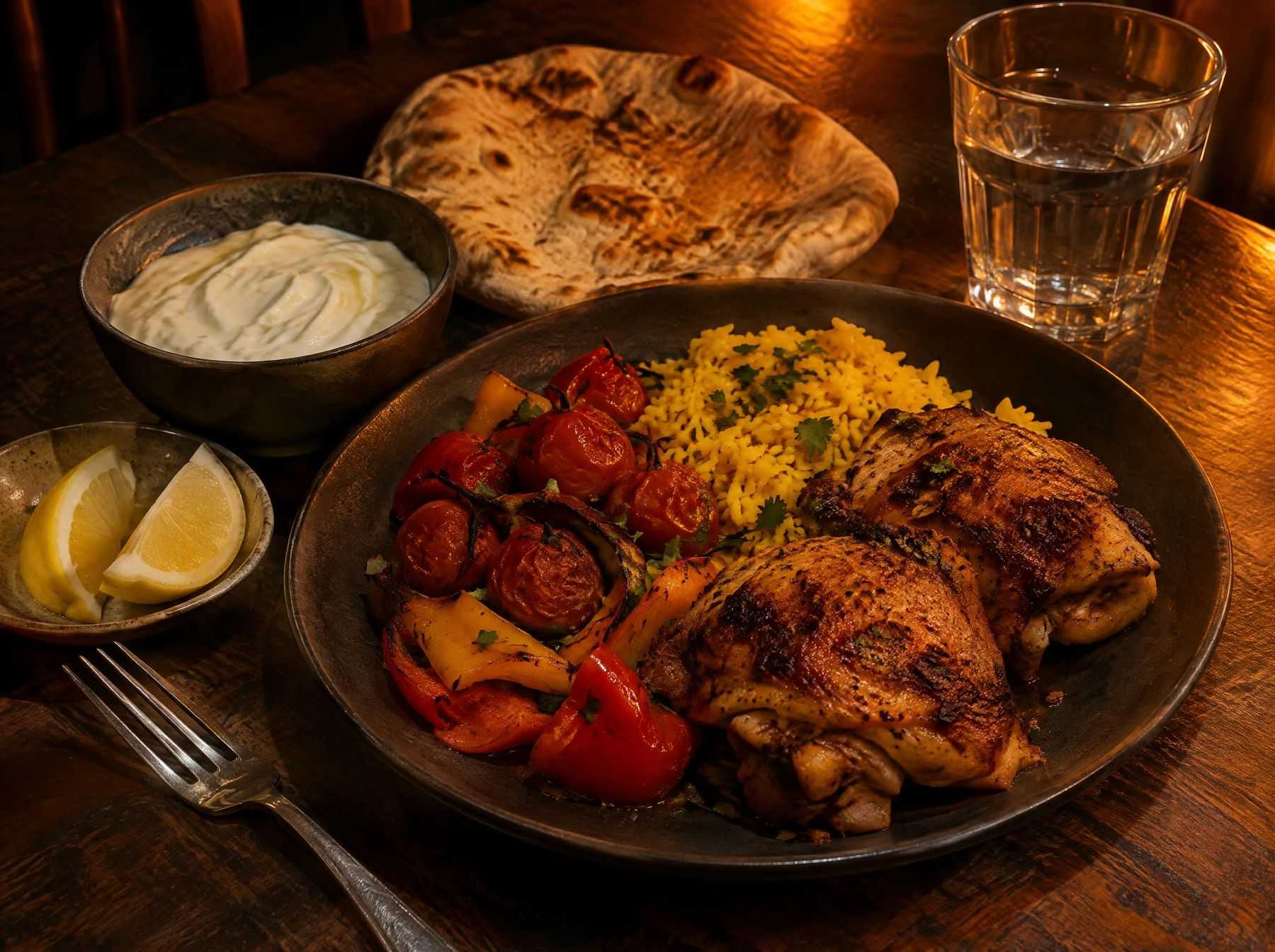
Key takeaways
- Animal sources (chicken, fish, lean red meat, eggs, dairy) are the most protein-dense per calorie.
- Plant sources (dal, chickpeas, beans, tofu) count too. They bring carbs and fibre with them, so portions need to be larger.
- Roughly 1.6 to 2.2 g of protein per kg of body weight a day supports muscle when you train.
- Build each meal around a protein source of about 25 to 40 g and the daily total takes care of itself.
- All figures here are approximate. Brands, cuts and cooking methods vary, so check your own labels.
The best high protein foods are lean meat and poultry, fish, eggs, Greek yoghurt and other dairy, plus lentils, beans, chickpeas and tofu. Chicken breast, tinned tuna, eggs and Greek yoghurt give the most protein for the fewest calories. The tables below show approximate protein per serving so you can build meals that reach your daily target.
What counts as a high protein food?
A high protein food is one where a normal serving gives you a meaningful amount of protein, roughly 15 g or more, without a large calorie cost.
That second part matters. Peanut butter is often called a protein food, but a tablespoon has only around 4 g of protein for roughly 95 kcal. Most of its calories come from fat. Chicken breast gives around 31 g of protein per 100 g cooked for roughly 165 kcal. Both have a place in your diet, but only one will carry your protein target.
Which meat, poultry and fish are highest in protein?
Lean poultry, lean red meat and most fish provide around 20 to 31 g of protein per 100 g cooked. These are the simplest way to get a large amount of protein into one meal.
| Food (cooked weight) | Approx. protein | Approx. calories |
|---|---|---|
| Chicken breast, 100 g | 31 g | 165 kcal |
| Turkey breast, 100 g | 29 g | 150 kcal |
| Chicken thigh, skinless, 100 g | 25 g | 180 kcal |
| Lean beef mince (5% fat), 100 g | 26 g | 170 kcal |
| Lean lamb leg, 100 g | 26 g | 200 kcal |
| Tinned tuna in water, drained, 100 g | 25 g | 110 kcal |
| Salmon fillet, 100 g | 23 g | 200 kcal |
| White fish (cod, hammour, sea bass), 100 g | 20 to 24 g | 100 to 125 kcal |
| Prawns, 100 g | 20 to 24 g | 100 kcal |
A few practical points:
- Cooked and raw weights differ. Meat loses water as it cooks, so 100 g cooked started as more than 100 g raw. Log the version you weighed.
- Cut and trim change the numbers. Lamb shoulder and regular mince carry far more fat than lean leg and 5% mince.
- Cooking method counts. Grilling, baking and air frying keep the figures close to the table. Deep frying and heavy oil do not.
- Oily fish brings more calories and useful fats. Salmon, mackerel and sardines are worth eating once or twice a week even though they are less lean.
Which dairy foods and eggs are high in protein?
Greek yoghurt, skyr, cottage cheese, milk and eggs are the easiest high protein foods to add to breakfast and snacks, because none of them need much cooking.
| Food | Approx. protein | Approx. calories |
|---|---|---|
| Eggs, 2 large | 13 g | 150 kcal |
| Egg whites, 100 g | 11 g | 50 kcal |
| Greek yoghurt, fat-free, 200 g | 20 g | 115 kcal |
| Skyr, 200 g | 22 g | 130 kcal |
| Cottage cheese, 150 g | 17 g | 150 kcal |
| Semi-skimmed milk, 250 ml | 9 g | 125 kcal |
| Laban (plain, drinking), 250 ml | 8 g | 100 to 150 kcal |
| Paneer, 60 g | 11 g | 190 kcal |
| Halloumi, 60 g | 13 g | 190 kcal |
| Whey protein, 1 scoop (about 30 g) | 20 to 24 g | 110 to 120 kcal |
"Greek style" yoghurt is not the same as strained Greek yoghurt and usually has less protein, so compare labels. Paneer and halloumi are useful, especially for vegetarians, but they are high in fat, so weigh the portion.
What are the best plant-based high protein foods?
Lentils, chickpeas, beans, tofu, tempeh and edamame are the strongest plant sources. They provide less protein per calorie than meat, but they add fibre and are cheap, filling and easy to batch cook.
| Food | Approx. protein | Approx. calories |
|---|---|---|
| Cooked lentils or dal, 200 g | 16 to 18 g | 230 kcal (before oil) |
| Cooked chickpeas, 200 g | 15 g | 280 to 330 kcal |
| Kidney beans, 200 g | 16 g | 250 kcal |
| Fava beans (foul), 200 g | 15 g | 220 kcal |
| Firm tofu, 150 g | 18 to 22 g | 180 to 220 kcal |
| Edamame, 100 g | 11 g | 120 kcal |
| Oats, 50 g dry | 6 g | 190 kcal |
| Almonds, 30 g | 6 g | 175 kcal |
| Hummus, 2 tablespoons | 2 g | 80 to 100 kcal |
If you eat little or no meat, two habits help. First, combine sources across the day: dal with rice, hummus with flatbread, beans with eggs or yoghurt. Second, accept that plant protein comes with carbs, and reduce the rice or bread portion a little to make room. A vegetarian plate of dal, paneer, yoghurt and one chapati can reach 35 g of protein comfortably.
How much protein do you need each day?
Most people who train do well on roughly 1.6 to 2.2 g of protein per kg of body weight a day. For a 70 kg adult that is about 110 to 155 g. For 90 kg, about 145 to 200 g.
Where you sit in that range depends on your goal. During fat loss, the higher end helps protect muscle and manage hunger, as explained in how much protein you need to lose fat. For gaining size, total calories matter just as much, which is covered in how much protein you need to build muscle.
For a personal figure, use the free calorie and protein calculator. If you have kidney disease or another medical condition that affects your diet, speak to your GP or doctor before increasing your protein intake.
How do you build a high protein day?
Pick a protein source for each meal first, then add carbs, vegetables and fats around it. Three meals of 30 to 40 g plus one or two snacks of 15 to 25 g will reach most targets.
Here is an example day of roughly 150 g of protein, using approximate figures:
- Breakfast: three-egg omelette, 150 g Greek yoghurt and fruit. About 35 g.
- Lunch: 150 g grilled chicken breast with rice and salad. About 47 g.
- Snack: a glass of laban and a handful of almonds, or a whey shake. About 15 to 22 g.
- Dinner: 150 g lean lamb or fish, a bowl of dal, vegetables and one chapati. About 45 g.
Cooking protein in bulk makes this far easier during the working week. The system in meal prep for busy people shows how to cover several days in one session. If mornings are your weak point, start with the high protein breakfast ideas.
Clients who work with JR get protein and calorie targets set around the foods they already eat, as part of nutrition coaching that is reviewed every week.
Frequently asked questions
Which food has the most protein per 100 g?
Among everyday whole foods, cooked chicken breast and turkey breast are near the top at around 29 to 31 g of protein per 100 g, with tinned tuna and lean beef close behind. Protein powders are higher per 100 g because they are concentrated, but nobody eats them in that amount. For normal meals, lean poultry is the benchmark.
How can you get 100 g of protein a day?
Split it across the day. For example, two eggs with 200 g of Greek yoghurt at breakfast gives around 33 g, 120 g of cooked chicken at lunch adds around 37 g, and a portion of fish or lean mince with dal at dinner adds 30 g or more. Three protein-centred meals reach 100 g without supplements.
Can you get enough protein without eating meat?
Yes, with a little more planning. Eggs, Greek yoghurt, milk, paneer, tofu, lentils, chickpeas and beans can all contribute, and a protein powder can fill gaps if needed. Portions of plant foods need to be larger for the same protein, and they bring carbohydrates with them, so adjust rice and bread portions to keep calories in line.
The bottom line
High protein eating is not complicated. Choose a lean protein source for every meal, know roughly what a portion provides and keep a few easy options in the fridge. Use the tables above as approximate guides and check your own labels. If you would like protein and calorie targets built around your routine, your food preferences and your goal, apply for coaching and JR will reply personally.
This guide is general information for healthy adults and is not medical advice. If you have a health condition, are pregnant or take medication, speak to your GP before changing your training or diet. Results vary from person to person.

