
Key takeaways
- Training tells your body to build muscle. Food provides the material and energy to do it.
- Eat in a small surplus. A large one mostly adds fat.
- Aim for roughly 1.6 to 2.2 g of protein per kg of body weight a day, spread over three to five meals.
- Carbohydrate fuels your sessions. Fat supports general health. You need both.
- Track your body weight trend and adjust your intake every two to three weeks.
Good nutrition for muscle growth comes down to three things: a small calorie surplus, enough protein every day and enough carbohydrate to train hard. Roughly 1.6 to 2.2 g of protein per kg of body weight is the target most people need. Timing, supplements and special foods are minor details by comparison.
How many calories do you need to build muscle?
You need slightly more calories than you burn. A small surplus, roughly 250 to 500 kcal a day above maintenance, is enough for most people. Building muscle is an energy-costly process, and it runs best when your body is not short of fuel.
Bigger is not better here. Your body can only build muscle at a limited rate, and that rate slows as you become more experienced. Calories beyond what it can use for growth are stored as fat. A very large "bulk" gives you a little more muscle and a lot more fat, followed by a long diet.
A practical method:
- Estimate your maintenance calories with the calorie and protein calculator.
- Add a small surplus.
- Weigh yourself several mornings a week and take the weekly average.
- Aim for a slow, steady rise in body weight. If the average is flat after two to three weeks, add a little more food. If it is climbing quickly and your waist is growing, reduce it slightly.
Beginners and people carrying more body fat can often build muscle at maintenance or even in a small deficit. That approach is covered in body recomposition.
How much protein supports muscle growth?
Roughly 1.6 to 2.2 g of protein per kg of body weight a day supports muscle growth when you are training. For a 70 kg person, that is about 110 to 155 g a day. More than this is not harmful for healthy people, but it does not build more muscle.
Spread it across the day. Three to five meals, each with a solid portion of protein, is easier to manage than one large serving in the evening, and it gives your body a regular supply.
Useful sources include:
- Chicken, turkey, lean lamb and beef
- Fish and prawns
- Eggs
- Greek yoghurt, laban, milk, cottage cheese and paneer
- Dal, chickpeas, beans and hummus
- Tofu and soya products
- Protein powder, as a convenient top-up and not a requirement
If you eat little or no meat, combine pulses with dairy, eggs or soya across the day and aim for the upper end of the range. There is more detail in how much protein to build muscle and a full high protein foods list. If you have kidney disease or another medical condition, speak to your GP before raising your protein intake.
What role do carbohydrates and fats play?
Carbohydrate fuels hard training, and fat supports hormones and general health. Once protein is set, the rest of your calories come from these two, and neither should be cut out.
Carbohydrate is your body's preferred fuel for lifting. Sessions feel stronger and you recover better between them when you eat enough. Rice, oats, potatoes, bread, chapati, flatbread, pasta, fruit and dates are all good choices. Carbohydrate is also the easiest place to add calories when you need to eat more.
Fat should make up a moderate share of your intake. Olive oil, nuts, seeds, avocado, oily fish and whole eggs are good sources. Very low-fat diets are a poor idea for long-term training. On the other hand, fat is energy dense, so heavy use of oil and ghee can push you well past a small surplus without you noticing.
A simple way to set it up:
| Step | Target |
|---|---|
| 1. Calories | Maintenance plus a small surplus |
| 2. Protein | Roughly 1.6 to 2.2 g per kg of body weight |
| 3. Fat | A moderate amount from mostly unsaturated sources |
| 4. Carbohydrate | The remaining calories |
| 5. Fruit, vegetables and fibre | With most meals |
Does meal timing matter for muscle growth?
Meal timing matters a little, but far less than your daily totals. If your calories and protein are right across the day, you have done most of the work.
What is worth doing:
- Eat protein at each meal. Three to five servings spread through the day.
- Eat before you train. A meal with carbohydrate and protein two to three hours before, or a lighter snack closer to the session, helps you lift well.
- Eat after you train. A normal meal with protein and carbohydrate within a couple of hours is fine. There is no need to rush a shake within minutes.
- Do not train hungry and under-fuelled if it makes your sessions worse.
More examples are in what to eat before and after a workout. During Ramadan the same principles apply inside a shorter eating window, with protein at both suhoor and iftar.
What does a day of nutrition for muscle growth look like?
A day of eating for muscle growth looks like ordinary meals, each built around a protein source, with a generous portion of carbohydrate and some vegetables or fruit. It does not need to be plain or repetitive.
Here is one example. Portions depend on your own targets.
| Meal | Example |
|---|---|
| Breakfast | Oats made with milk, a banana, and three or four eggs on the side |
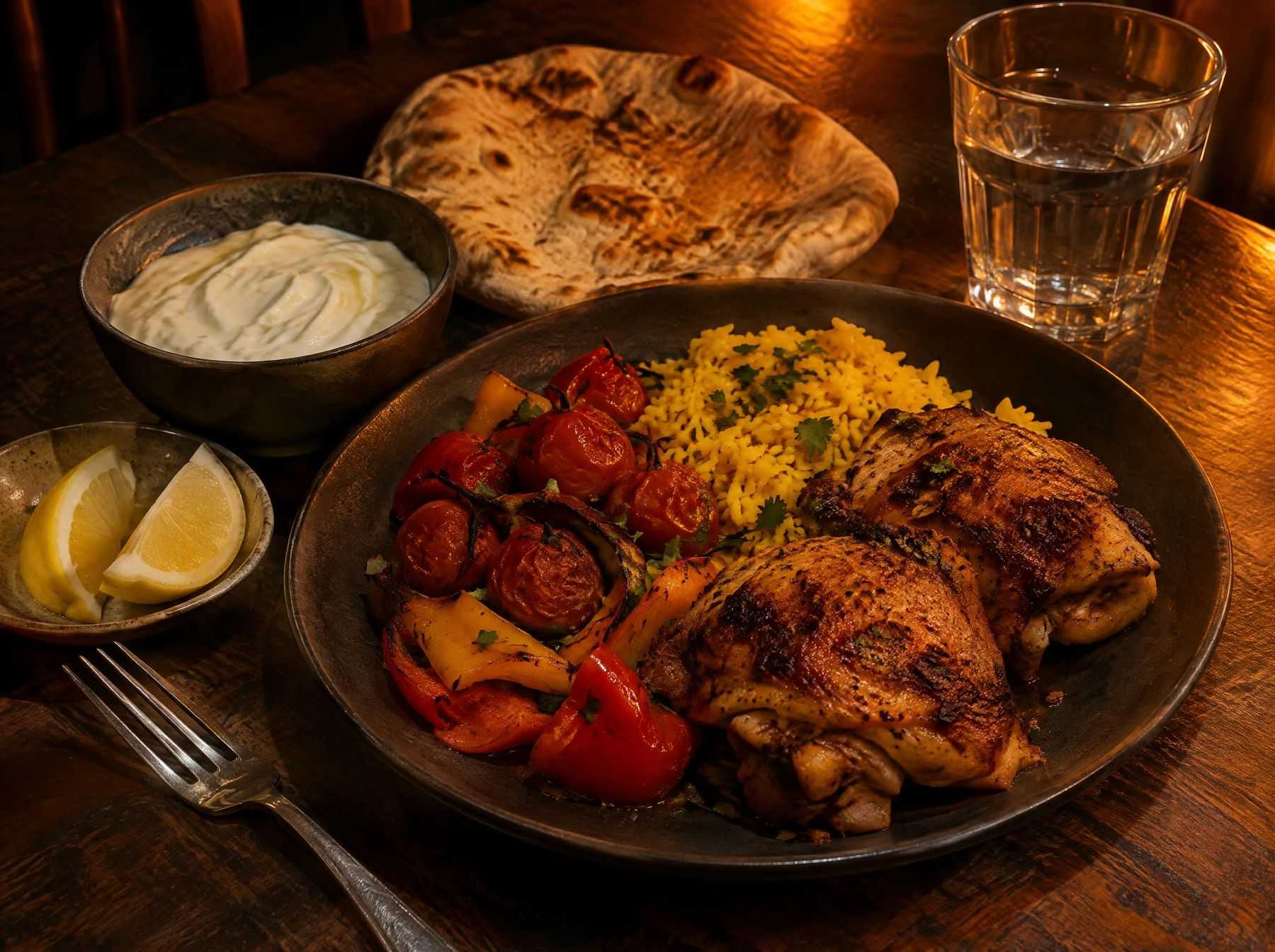
| Lunch | Grilled chicken, rice, salad, and a spoonful of hummus |
| Snack before training | Greek yoghurt or laban with dates and a handful of nuts |
| Dinner after training | Lamb or dal with chapati or rice, and cooked vegetables |
| Evening, if needed | Milk or a protein shake, and fruit |
If you struggle to eat enough, which is common for naturally slim people, use these tactics:
- Add a fourth or fifth eating occasion instead of forcing bigger plates.
- Drink some of your calories: milk, laban, smoothies with oats and nut butter.
- Use energy-dense additions such as olive oil, nuts and dried fruit.
- Keep meal times regular so appetite adapts.
The article on building muscle as a hard gainer covers this in depth.
Do you need supplements to build muscle?
No. Supplements are optional, and food does almost all of the work. Two are worth knowing about.
- Creatine monohydrate. At 3 to 5 g a day, it is the best-supported supplement for strength training. Take it daily at any time.
- Protein powder. It is simply a convenient food. Use it if it helps you reach your protein target.
Most other muscle-building products add cost without adding much else. If you have a health condition or take medication, check with your doctor before using supplements.
At JR Coaching, nutrition targets are set for each client around their food preferences, family meals and schedule, then adjusted at the weekly check-in as body weight and training respond. You can read more on the nutrition coaching page.
Frequently asked questions
Can you build muscle without eating in a calorie surplus?
Yes, in some cases. Beginners, people returning after time off and those with more body fat can build muscle at maintenance or in a small deficit, as long as protein is high and training is progressive. Leaner, more experienced lifters will usually need a small surplus to keep gaining at a worthwhile rate.
How much weight should you gain per month when building muscle?
There is no single figure, but slow is the aim. A gradual rise in your weekly average weight, with your lifts going up and your waist changing little, suggests most of the gain is muscle. If your weight is climbing quickly and your waist with it, the surplus is too large. Individual results vary with training history.
Is it better to eat more meals to build muscle?
Meal frequency is mainly about convenience. Three to five meals a day, each with a good serving of protein, works well for most people. More meals help if you find it hard to eat enough in a few sittings. Fewer, larger meals are fine if your daily calories and protein are still met.
The bottom line
Eat a little more than you burn, hit your protein every day, fuel your training with carbohydrate and adjust by what your body weight and lifts tell you. Food as fuel. If you want targets built around the way you actually eat, with a muscle building programme to match, apply for coaching and JR will reply personally.
This guide is general information for healthy adults and is not medical advice. If you have a health condition, are pregnant or take medication, speak to your GP before changing your training or diet. Results vary from person to person.

