Key takeaways
- Use four measures: weight trend, tape measurements, photos and training performance.
- Weigh under the same conditions and judge the weekly average, not a single day.
- Take measurements and photos every one to two weeks, in the same place and light.
- A training log shows progress that the mirror and the scale miss.
- Look for the trend over three to four weeks before you change anything.
The best answer to how to track fitness progress is to use several measures together: your average body weight, a few tape measurements, progress photos and a training log. No single number tells the full story. The scale on its own misleads people every week, because it measures water and food as well as fat and muscle.
Why is the scale not enough on its own?
The scale is not enough because body weight changes from day to day for reasons that have nothing to do with fat. It is useful data, but only as part of a set.
Your weight can move by a kilogram or more overnight because of:
- Salt and carbohydrate in yesterday's meals, which change how much water you hold.
- The weight of food and drink still in your system.
- Hard training, which causes temporary water retention in muscle.
- The menstrual cycle.
- Poor sleep, travel and stress.
It also cannot tell fat from muscle. Someone who starts lifting may lose fat and gain a little muscle in the same month. The scale barely moves, yet their waist is smaller and their clothes fit differently. That is real progress, and a scale-only approach would call it failure. It is one of the most common reasons people think they have hit a weight loss plateau when they have not.
How to track fitness progress with four simple measures
Track fitness progress with body weight, measurements, photos and performance. Each covers a blind spot in the others.
| Measure | What it tells you | How often |
|---|---|---|
| Body weight | Overall direction of fat loss or gain | Daily or 3 to 4 times a week, averaged weekly |
| Tape measurements | Where your body is changing | Every 1 to 2 weeks |
| Photos | Visible change in shape | Every 2 weeks |
| Training log | Strength, fitness and muscle retention | Every session |
| How you feel | Energy, sleep, hunger, mood | Brief weekly note |
The whole routine takes a few minutes a week. That is all it needs.
How should you weigh yourself?
Weigh yourself first thing in the morning, after the toilet, before eating or drinking, in the same clothing or none. Use the same scale on the same hard floor. Consistent conditions matter more than an expensive scale.
Then use the numbers properly:
- Record your weight each time you weigh. Daily gives the best average, but three or four mornings a week works.
- At the end of the week, work out the average.
- Compare this week's average with last week's.
- Ignore individual high or low days.
For fat loss, a drop of about 0.5 to 1 percent of body weight a week in that average is a sensible pace. If the average has not moved for three weeks and your measurements are also flat, it is time to adjust. If daily weighing makes you anxious or affects your mood, weigh less often or leave it out and rely on the other measures. Anyone with a history of disordered eating should speak to their GP or doctor before tracking weight or food closely.
How do you take measurements and progress photos?
Take both under the same conditions every time, so the only thing that changes is you. Small differences in tape position or lighting can hide or invent progress.
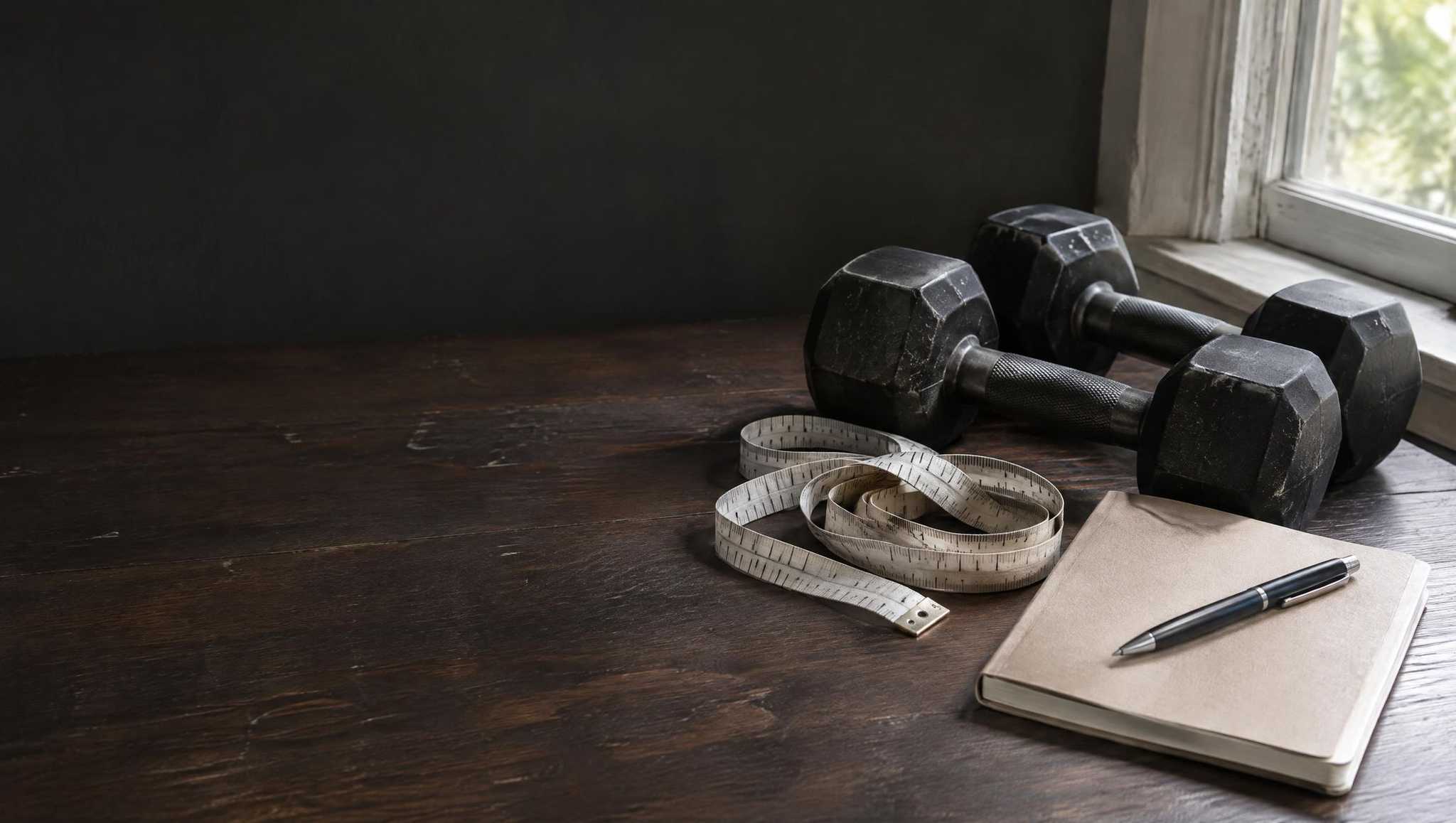
Measurements. Use a soft tape measure, in the morning, relaxed and not pulled tight. Useful sites are:
- Waist, at the navel
- Hips, at the widest point
- Chest
- One thigh, midway between hip and knee
- One upper arm, midway between shoulder and elbow
Measure each site twice and record the figure in centimetres. Waist is the most informative for fat loss. Arms, chest and thighs are more useful when you are building muscle.
Photos. Stand in the same spot, in the same light, at the same time of day, wearing the same clothing. Take front, side and back. Keep the camera at the same height and distance, relaxed posture, no flexing. Then compare photos four or more weeks apart. Week-to-week differences are too small to see, and looking for them every day only causes frustration.
How do you track progress in the gym?
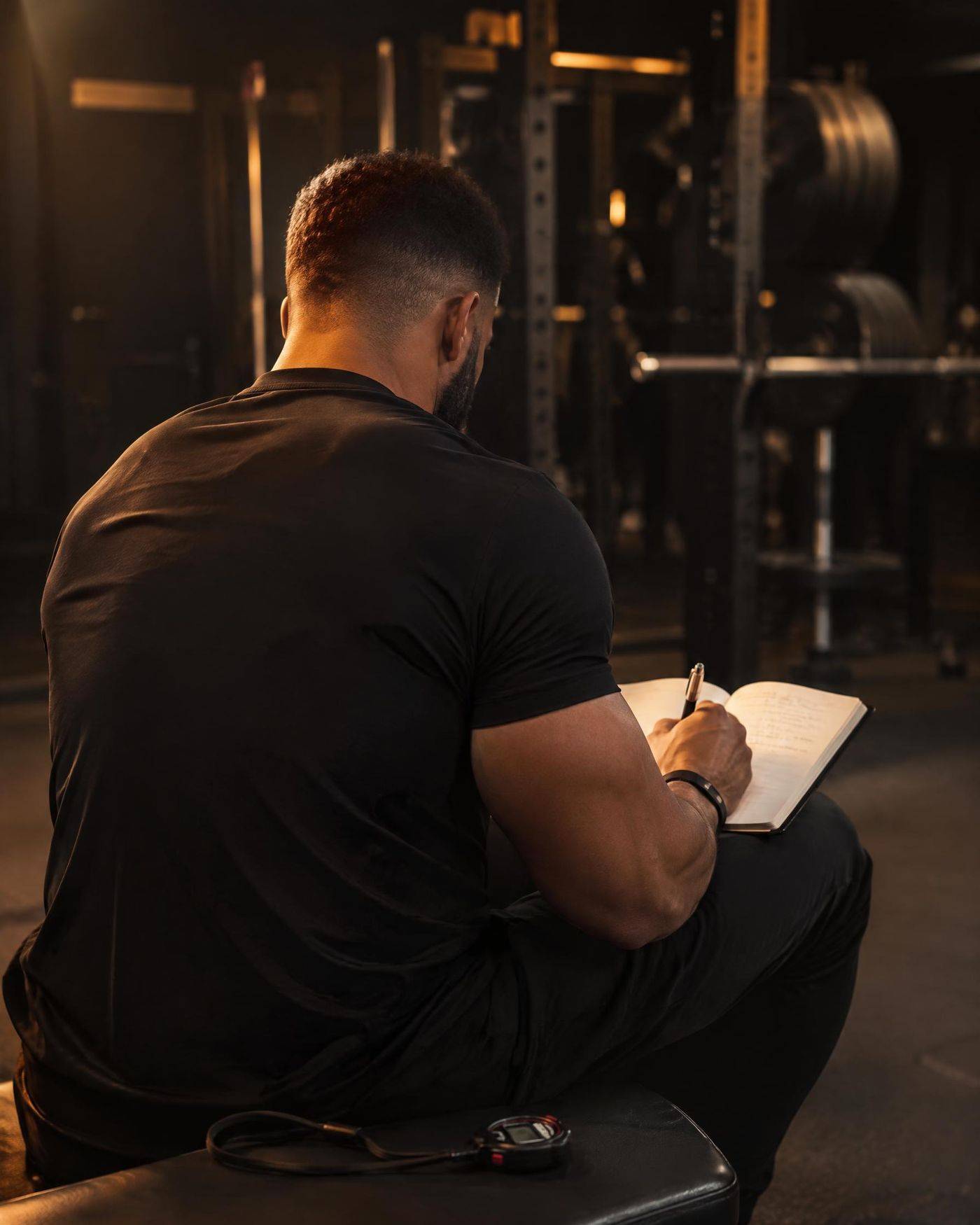
Track progress in the gym by writing down every working set: exercise, weight and reps. A notebook or the notes app on your phone is enough.
Before each set, look at what you did last time and try to match it or beat it slightly. Over a few months the log tells you a lot:
- Lifts going up while your weight is stable or rising usually means you are building muscle.
- Lifts holding steady while your weight drops means you are keeping muscle as you lose fat, which is exactly the aim.
- Lifts falling across the board suggests the deficit is too steep, or sleep and recovery need attention.
This is how progressive overload works in practice. You cannot push forward on something you have not recorded.
For general fitness, track simple markers too: your daily step count, how long a set walk or run takes, your resting recovery between sets. The steps and water calculator will give you a daily step target to work towards.
How often should you review your progress, and what should you change?
Review once a week, and only change the plan when the trend over three to four weeks tells you to. Checking more often does not make progress faster. It only makes you react to noise.
A simple weekly review:
- Calculate your average weight.
- Note your measurements and photos if they are due.
- Look over your training log.
- Write one line on energy, sleep and hunger.
- Ask whether you actually followed the plan.
Step five comes first when deciding what to do. If you did not follow the plan, the fix is adherence, not a new plan. If you did, and nothing has moved for three weeks or more, make one small change and review again.
This is what a coaching check-in does. At JR Coaching, clients send their weight, measurements, photos and a note on how the week went. JR reviews them and adjusts the plan. The article on weekly check-ins and accountability explains the process, and you can see what steady tracking produces on the results page.
Frequently asked questions
How often should you weigh yourself to track progress?
Daily weighing gives the most reliable weekly average, because it smooths out normal ups and downs. If that feels like too much, three or four mornings a week under the same conditions still works. Weighing once a week is the least reliable option, since one unusual day can make a good week look like a bad one.
Why do you look different but weigh the same?
You have probably lost fat and held or gained muscle, or you are carrying more water than usual. Muscle takes up less space than the same weight of fat, so your shape can change while the scale stays still. This is common in people new to strength training, and it is why measurements and photos matter.
Are body fat scales accurate enough to use?
Home body fat scales are not accurate enough to rely on for a true percentage. Their readings shift with hydration, food and the time of day. If you use one, look only at the long-term trend under identical conditions. A tape measure around your waist and regular photos are simpler and usually more useful.
The bottom line
Track a few things, track them the same way each time, and judge the trend, not the day. Weight, measurements, photos and your training log together will tell you the truth about your progress. If you want someone to read those numbers with you every week and decide what happens next, apply for coaching and JR will reply personally. Trust the process.
This guide is general information for healthy adults and is not medical advice. If you have a health condition, are pregnant or take medication, speak to your GP before changing your training or diet. Results vary from person to person.