
Key takeaways
- A pair of adjustable dumbbells and a mat is enough to train your whole body at home.
- Train three days a week with full-body sessions built on squat, hinge, push, pull and core movements.
- Take most sets to within one to three reps of failure. Easy sets do not build muscle.
- When the weights feel light, add reps, slow the lowering phase, add pauses or use single-leg and single-arm versions.
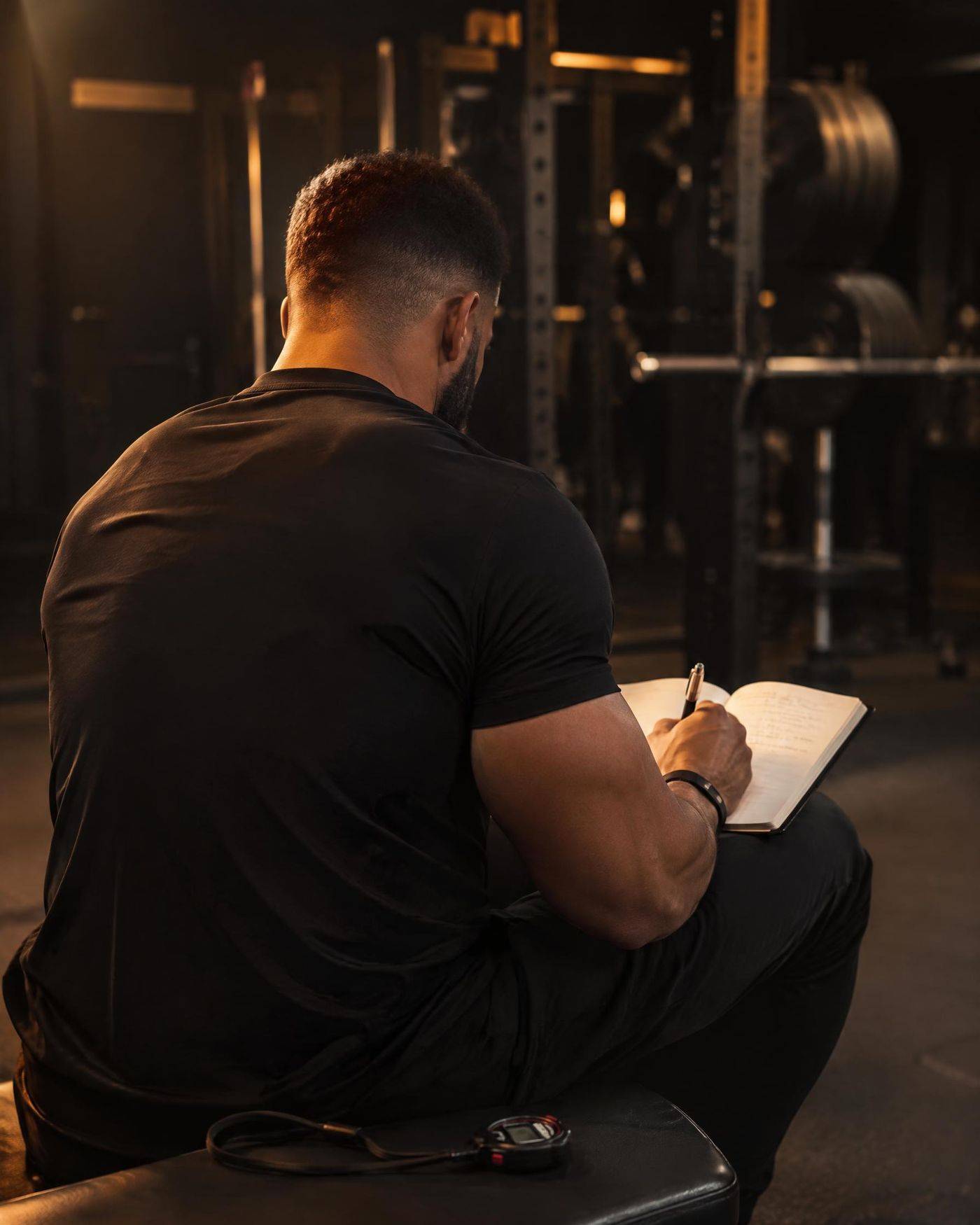
- Record every session so you know what to beat next time.
A home dumbbell workout can build muscle and strength as long as it covers every major movement, the sets are hard and you keep making it harder over time. You need a pair of dumbbells, a little floor space and about 40 minutes, three times a week. This plan gives you the exact sessions, sets and reps to follow.
Can you build muscle with a home dumbbell workout?
Yes, you can build muscle with a home dumbbell workout. Your muscles respond to tension and effort, not to the building you train in. If a set is challenging and you progress it over time, it works, whether you are in a commercial gym, a spare room or a hotel.
Dumbbells have some real advantages. Each side works on its own, which exposes and corrects strength differences. They allow a natural range of motion at the shoulders and wrists. And they remove the travel time that stops many people from training at all.
The limit is load. Strong legs will eventually outgrow light dumbbells, so you have to be smart about how you progress. That is covered further down.
What equipment do you need?
You need one pair of dumbbells that you can make heavier over time, and very little else.
- Adjustable dumbbells. The best option, because one pair covers every exercise. If you have fixed weights, a lighter pair and a heavier pair is a good start.
- A mat. For floor presses, core work and comfort.
- A sturdy chair, sofa edge or bench. For rows, split squats and hip thrusts.
- Optional: a resistance band and a doorway pull-up bar, which add more pulling options.
Clear enough space to lie down with your arms out and to step forward and back. Train in trainers with a flat sole or on a non-slip surface, and check that anything you lean on will not slide.
The three-day home dumbbell workout plan
Train on three non-consecutive days, for example Monday, Wednesday and Friday. Rest 60 to 90 seconds between sets. Warm up with five minutes of brisk walking on the spot, bodyweight squats, arm circles and a light set of the first exercise.
Day 1
| Exercise | Sets | Reps |
|---|---|---|
| Goblet squat | 3 | 10 to 15 |
| Dumbbell floor press | 3 | 8 to 12 |
| Single-arm dumbbell row | 3 | 8 to 12 each side |
| Dumbbell Romanian deadlift | 3 | 10 to 15 |
| Lateral raise | 2 | 12 to 20 |
| Plank | 3 | 30 to 45 seconds |
Day 2
| Exercise | Sets | Reps |
|---|---|---|
| Reverse lunge | 3 | 8 to 12 each leg |
| Standing dumbbell shoulder press | 3 | 8 to 12 |
| Two-arm bent-over row | 3 | 10 to 12 |
| Dumbbell hip thrust (shoulders on sofa) | 3 | 10 to 15 |
| Dumbbell curl | 2 | 10 to 15 |
| Dead bug | 3 | 8 each side |
Day 3
| Exercise | Sets | Reps |
|---|---|---|
| Bulgarian split squat | 3 | 8 to 12 each leg |
| Push-up (hands raised if needed) | 3 | As many good reps as possible, stopping two short of failure |
| Single-arm dumbbell row | 3 | 10 to 15 each side |
| Single-leg Romanian deadlift | 3 | 8 to 10 each leg |
| Overhead triceps extension | 2 | 10 to 15 |
| Side plank | 2 | 20 to 30 seconds each side |
If you only have two days, do Day 1 and Day 2. If you want to understand why three sessions suits most people, see how many days a week you should train.
How do you perform the key exercises safely?
Perform every exercise with a braced trunk, a controlled lowering phase and a range of motion you can manage without pain. These cues cover the movements people most often get wrong.
- Goblet squat. Hold one dumbbell upright against your chest. Feet shoulder width, sit down between your hips, keep your heels flat and your chest tall.
- Floor press. Lie on your back with knees bent. Lower the dumbbells until your upper arms touch the floor lightly, elbows at about 45 degrees, then press up.
- Single-arm row. One hand and the same-side knee on a chair or sofa, back flat. Pull the dumbbell towards your hip, not your shoulder, and lower it slowly.
- Romanian deadlift. Soft knees, push your hips back, keep the weights close to your legs and your back flat. Stop at a strong hamstring stretch and stand up by driving your hips forward.
- Bulgarian split squat. Rear foot on a chair, front foot far enough forward that your knee stays over your foot. Lower straight down under control. Hold on to something for balance while you learn it.
- Shoulder press. Squeeze your glutes and keep your ribs down so your lower back does not arch as you press.
Stop any exercise that causes sharp or joint pain. If you have an injury, a heart condition, are pregnant or have not exercised for a long time, speak to your GP before starting. These lifts are the dumbbell versions of the movements explained in compound lifts for beginners.
How do you progress when your dumbbells feel too light?
You progress with light dumbbells by making each rep harder instead of making the weight heavier. Load is only one way to apply progressive overload. At home, use this order.
- Add reps. Work up to the top of the rep range on every set.
- Slow the lowering phase. Take three to four seconds on the way down.
- Add a pause. Hold the bottom of a squat, split squat or floor press for one to two seconds.
- Switch to single-limb versions. A Bulgarian split squat with 10 kg in each hand is far harder than a goblet squat with 20 kg.
- Add a set. Go from three sets to four on the exercises that have stalled.
- Buy heavier weights. When you can do 20 clean, slow reps of something, it is time.
Whatever method you use, the effort rule stays the same. Most sets should finish with only one to three reps left. If you could have done ten more, the set was a warm-up.
How should you eat and recover alongside home workouts?
You should eat and recover exactly as you would on a gym programme, because your body does not know the difference. Protein at roughly 1.6 to 2.2 g per kg of body weight a day supports muscle when you are training, and your calorie intake should match your goal. The free calorie and protein calculator will give you starting numbers.
Add a daily walk for general fitness and to offset long hours sitting. Sleep 7 to 9 hours where you can. And protect the routine: the biggest threat to a home workout plan is not the equipment, it is the sofa being three metres away. Fixing your training days and times in advance helps, and there are more ideas in how to stay consistent with exercise and fitness for busy parents.
Frequently asked questions
What weight dumbbells should you buy for home workouts?
Adjustable dumbbells are the best value, because your legs and back need far more weight than your shoulders and arms. As a rough guide, a set that adjusts up to about 20 kg per hand will keep most beginners progressing for a long time. If you buy fixed pairs, get a light and a heavy set.
Can you lose weight with a home dumbbell workout?
Yes, as part of a wider plan. Fat loss comes from a sustained calorie deficit, so your nutrition does most of the work. Dumbbell training helps you keep muscle while you lose fat, and daily steps add to the energy you burn. Together, they produce a better result than dieting alone.
Is a home dumbbell workout as good as the gym?
For beginners and most people training for general fitness, it is close. A gym offers heavier loads and more options, which matters more as you get stronger, particularly for the legs and back. But a home plan you follow three times a week will always beat a gym membership you rarely use.
The bottom line
A pair of dumbbells, three sessions a week and steady progression is enough to build muscle at home. Follow the plan above for 8 to 12 weeks before you change anything. JR Coaching works with home set-ups as well as commercial and hotel gyms, so if you want online coaching with a plan built around the exact equipment you own, apply for coaching and JR will reply personally.
This guide is general information for healthy adults and is not medical advice. If you have a health condition, are pregnant or take medication, speak to your GP before changing your training or diet. Results vary from person to person.